

A six-month SEO proposal can look reasonable until you discover that it includes recommendations but no time from a developer to put them in place. A monthly agreement can make more sense if the only job is to fix one indexing problem and verify the repair. Choose an SEO contract length that gives your team enough time to make the agreed changes and see useful evidence. Put a review date in the proposal before you agree to the term.
1. Separate the Contract Term From the Results Timeline
The term tells you how long you are buying the service. It cannot tell you when Google will rank a page or when a customer will enquire. A team might fix a blocked service page early in the engagement, then have to wait for Google to revisit it. A new set of Arabic and English landing pages may take longer to approve and publish, even before search performance can be assessed.Ask the provider to separate the dates it can commit to from outcomes it can only estimate. A deadline for delivering an audit, implementing an agreed fix or reviewing data is useful. A promise of first place by the third invoice is a poor basis for choosing a term. Google’s guide to hiring an SEO explains what an SEO provider can do and what to ask before hiring.
2. Compare SEO Contract Length Options by Scope
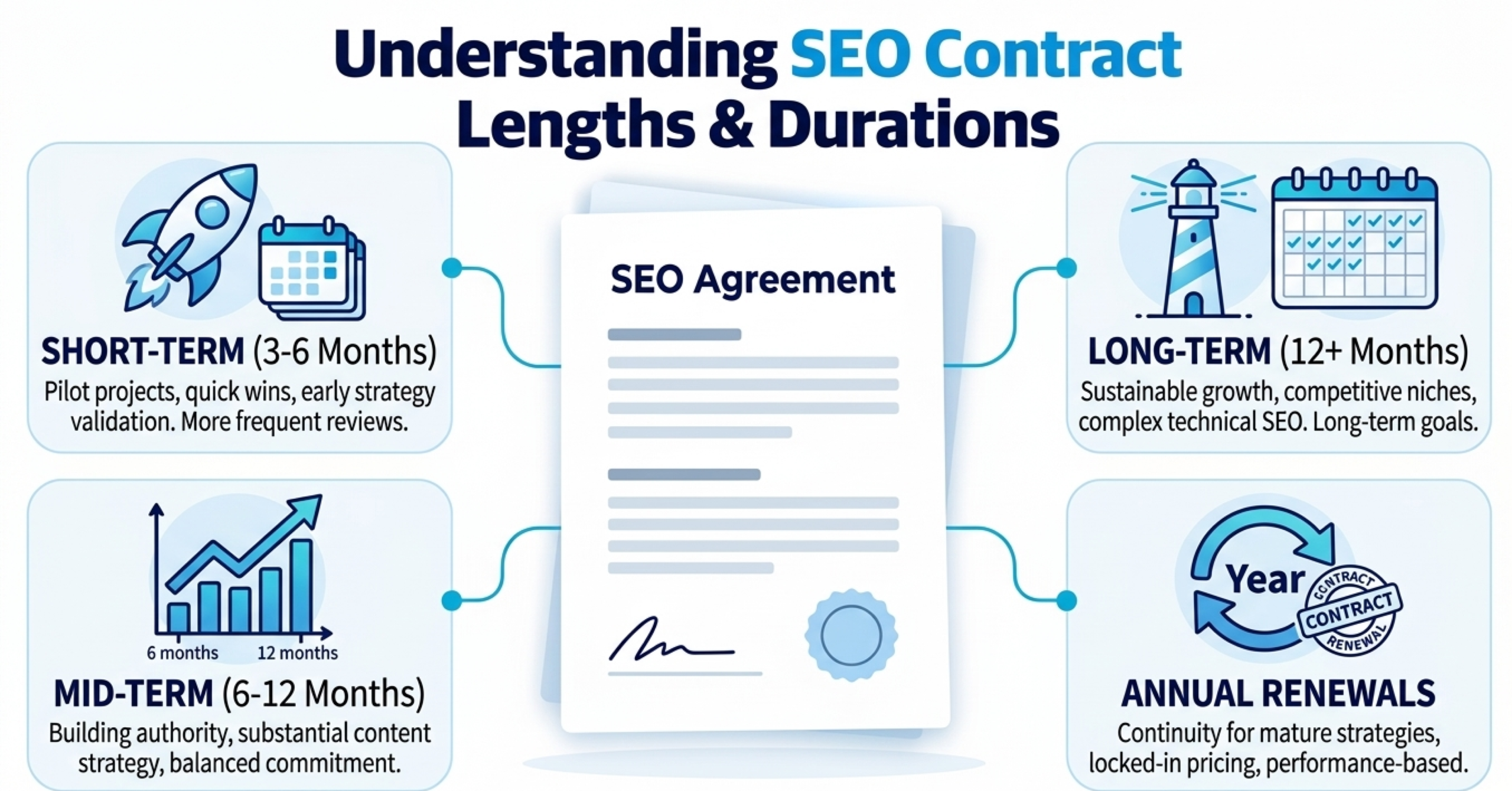
Use the length of the work to compare the options. These are planning examples for a Saudi business, not a survey of what agencies charge or require.
Compare the proposed tasks before comparing fees. Two six-month proposals may cover different things: one may include implementation, while the other delivers a list for your staff to complete. Use the Saudi SEO cost guide to check what is included in the fee.
3. Count the Time Your Own Team Needs
The right SEO contract length depends on who can approve and publish the work. Consider a Riyadh maintenance company that wants Arabic and English pages for emergency repairs and annual contracts. Someone must confirm its service areas and answer common customer questions. A fluent reviewer needs to approve the Arabic copy, and a developer may have to change the quotation form. Put those steps on the same calendar as the agency’s tasks.Ask for a named owner and date for each dependency. If your developer cannot start until next month, agree whether the agency should begin with a diagnostic or wait until implementation is possible. If the work includes fixes to redirects, indexing or templates, the technical SEO checklist can help you identify work that needs developer time.
4. Set a Review Date With Evidence to Bring
Hold the first review early enough to correct a problem. For a three-month agreement, a review at the end of the first month could check access, a baseline report and the first implemented changes. Agree on a second review before the notice deadline so you have time to decide what happens next. Adjust the dates if the approved work cannot be released on schedule.Ask the agency to bring a short change log: what went live, which URLs changed, what was tested and what is still waiting. If important changes are blocked, record the blocker and who will resolve it. This gives you a better basis for discussing the agreement than a report that only lists tasks.
5. Measure Progress Against the Pages You Paid to Improve
Record the pages and search queries you want to improve before work starts. If Saudi customers are the priority, use the country filter in Search Console’s Performance report, then look at the relevant pages and queries. A rise in worldwide impressions says little about whether a Riyadh service page is reaching the people it can serve. Compare periods of similar length and record promotions, stock changes or seasonal shifts that could affect the results.Review the enquiries as well. A tracked click on a phone button or a form submission can be a useful signal, but the business should also record whether the enquiry was suitable and whether it led to a sale or booking. At the checkpoint, ask whether the changes were implemented, whether the right audience is finding them and what the next phase would address.
6. Check Renewal, Notice and Handover
Find the renewal date, the notice deadline and the method for giving notice. Ask what happens if you need to pause, reduce scope or stop after a review. Check what fees would still be due and what work the provider will finish. Write down any answers you expect to rely on rather than leaving them in a sales call.Agree who controls the website, analytics and Search Console accounts, and who will have access to content and reports after handover. Ask for a record of completed edits, outstanding issues and recommended next steps. Our guide to choosing an SEO company covers other questions to ask when comparing providers.Check when billing starts and when the first delivery is due. If the agreement renews on 1 May but requires notice in April, schedule the decision before that April deadline. Ask the provider to confirm the exact date in writing. A review after the deadline can still be useful for planning the work, but it is poorly timed for deciding whether to renew.
7. Make the Term Fit the Decision You Need to Make
Suppose the Riyadh maintenance company can publish four priority service pages in its first month. It might use a defined three-month phase to launch those pages, resolve technical issues and review the early search and enquiry data. If the developer cannot release the pages until the third month, the same schedule leaves little time to evaluate the new pages. An initial diagnostic or a longer implementation window could fit better.The best SEO contract length is the shortest term that gives your team a fair chance to complete the agreed work and review it. If you are comparing proposals, share the scope, implementation dates and renewal deadline with Marksol Mavens through the contact page. Those details make it easier to judge whether the proposed term fits the work.